Nursery & City Park Irrigation: Sprinklers That Stand Up to Daily Use
2026-08-25
Nursery & City Park Irrigation: Sprinklers That Stand Up to Daily Use
Nurseries and city parks share a problem that farms and golf courses do not: the sprinklers run on someone else’s schedule. A container nursery may cycle water three or four times a day in July heat, because potted stock dries out within hours and overhead irrigation doubles as canopy cooling. A public park gets watered overnight by crews who also mow, edge, empty bins, and chase vandalism repairs. Neither site has the luxury of shutting down a zone for a quiet weekday fix.
That daily, high-turnover duty is what separates equipment that lasts from equipment that fails inside its first season. Cheap sprinkler heads with plastic gears and thin threads rarely survive a summer of this workload — the mower clips a riser, a nozzle strips, a bearing seizes on grit, and the head sits broken for weeks while the grass browns in a circle around it.
This guide covers how nurseries and municipal park crews choose sprinklers for these conditions: what the field parameters actually are, how the main sprinkler types compare under daily duty, and how to buy heads that take the punishment without blowing the maintenance budget.
Key takeaways
- Daily-use sites run multiple irrigation cycles per day, which multiplies the wear on lightweight plastic heads.
- Nurseries and parks need different heads in different zones — open turf, container rows, shrub borders, and tall-riser areas each have a sensible default.
- Impact sprinklers tolerate grit, fertigation, and public abuse better than gear-driven rotors in most conditions.
- Space heads at 50–60% of wetted diameter and verify pressure at the farthest head, not at the pump.
- Factory-direct sourcing trims per-head cost and unlocks OEM options such as custom nozzling, body colours, and private labelling.
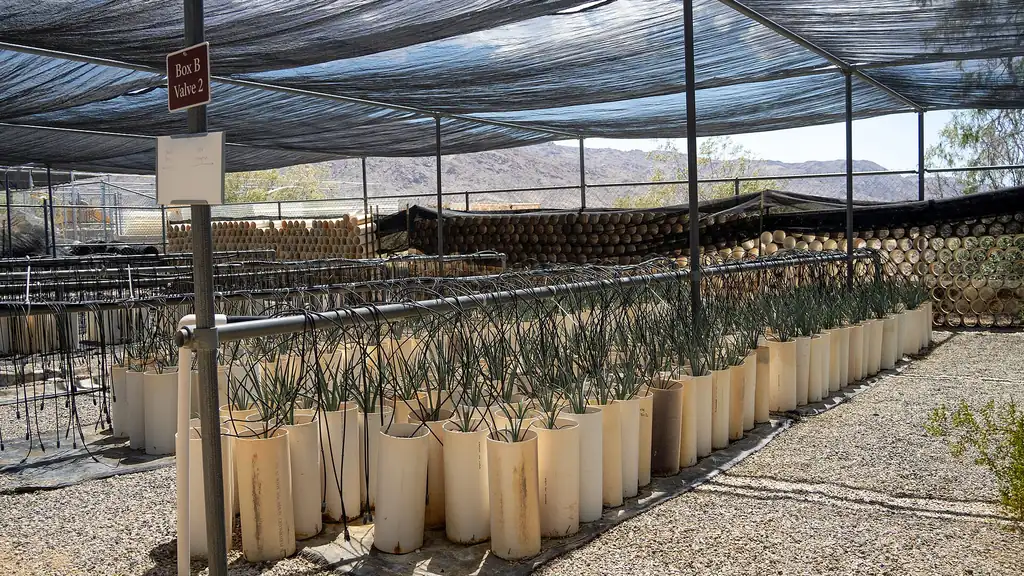
What Daily Use Actually Does to Sprinkler Equipment
Nursery irrigation is relentless by design. Container beds need frequent, short cycles because a litre of media in a black pot can heat up and dry out within hours on a hot day. A typical summer schedule runs two to four cycles a day, often with fertiliser injected into the line. That means every head cycles far more often than its equivalent on a farm field, and the water carries dissolved salts and suspended solids that leave deposits on nozzles and screens.
City parks add a different kind of abuse. Heads sit in public turf where mowers pass weekly, bicycles cut corners, and equipment gets dragged over valve boxes. Irrigation water often comes from ponds or treated effluent, which brings algae, grit, and leaf litter into the system. Meanwhile the maintenance budget per hectare is thin, and the crew that fixes sprinklers is the same crew that mows — so heads that need frequent attention simply stay broken.
The failure pattern is consistent across both sites. Lightweight plastic bodies crack at the riser thread when a mower clips them. Gear-driven rotors bind or slip when sand and silt work into the drive train. Nozzle orifices plug when filtration is coarse and the water is dirty. And because these sites run daily, a head that fails on Monday loses hundreds of square metres of coverage by Friday. Equipment for this duty needs open passages, few moving parts, and repair costs measured in cents rather than replacement assemblies.
Choosing a Sprinkler for Every Zone in a Nursery or Park
There is no single head that fits every zone, and trying to standardise on one usually means overpaying for areas that need less and under-specifying the areas that need more. The practical approach is to match the head to the zone’s radius, pressure, and abuse level.
| Zone | Recommended head | Typical radius | Working pressure | Why it fits |
|---|---|---|---|---|
| Container nursery beds | Brass or plastic impact on short risers | 9–15 m | 3–4.5 bar | Coarse droplets, open mechanism handles fertigation, heads are cheap to replace |
| Field-grown stock rows | Impact sprinkler, full or part circle | 12–18 m | 3.5–5 bar | Wide throw covers large rows, tall risers keep streams above young canopies |
| Propagation and greenhouse | Micro-spray or low-flow spray heads | 2–5 m | 1.5–3 bar | Small droplets, gentle distribution, low flow for frequent short cycles |
| Open park turf | Pop-up impact or rotary, part circle where needed | 12–18 m | 3–4.5 bar | Pop-up design resists mower strikes, impact version shrugs off dirty supply |
| Shrub beds and borders | Spray head or small part-circle impact on tall risers | 3–8 m | 2–3.5 bar | Tall risers clear the canopy, part circle keeps water off paths and walls |
| Paths, roadsides, fence lines | Part-circle impact on risers | 9–15 m | 3–4.5 bar | Half- and quarter-circle arcs cut overspray onto hard surfaces and save water |
Two rules apply across every row of that table. First, keep spare heads and nozzles in stock for the zones that run hardest — container beds and open turf will consume spares every season, and a $10 head replaced in ten minutes beats a three-week wait for a distributor order. Second, buy one head model per duty class so a single spare part kit covers the whole site.
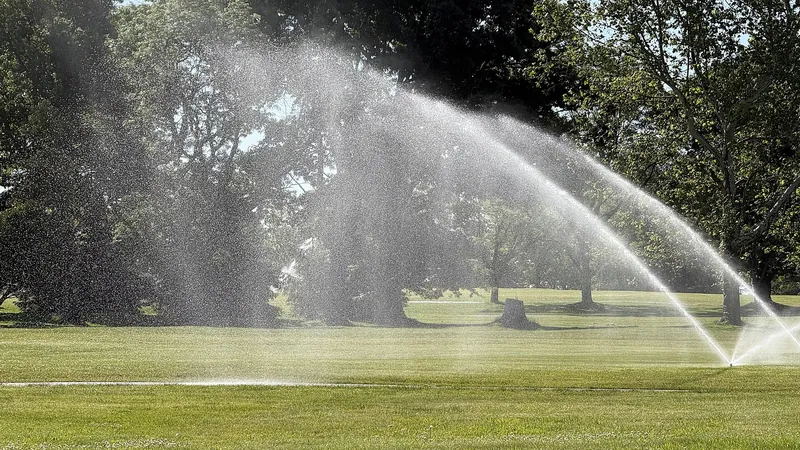
Impact vs Rotary vs Spray Head Under Daily Duty
The choice of drive mechanism decides how much maintenance a daily-use site will absorb. An impact sprinkler drives itself with a spring-loaded arm that strikes the stream and ratchets the head around — one external moving part. A gear-driven rotor rotates through an internal gear train. A spray head has no rotation at all, just a fixed pattern. Each behaves differently under the conditions nurseries and parks actually dish out.
| Factor | Impact sprinkler | Gear-driven rotor | Spray head |
|---|---|---|---|
| Drive mechanism | Spring-loaded arm striking the stream | Internal gear train (usually planetary) | None — fixed pattern |
| Main moving parts | One (the arm) | Gear train, seals, small components | One small retraction spring (pop-up) |
| Typical working pressure | ~2.5–5 bar | Often ~3–5 bar, narrower sweet spot | ~1.5–3 bar |
| Typical radius | 9–18 m depending on model | 9–18 m typical for park rotors | 2–6 m |
| Droplet size | Coarse | Medium, adjustable | Fine mist to light spray |
| Tolerance to dirty water | High — open passages | Moderate — grit can bind gears | Moderate — nozzles plug easily |
| Tolerance to fertigation | High | Moderate | Low — salts crust small orifices |
| Repair cost per head | Cents — springs and nozzles | Replacement gear assemblies | Replacement nozzle or body |
| Vandalism and impact resistance | Durable metal/brass options | Plastic bodies common | Lightweight, easily damaged |
For open turf and stock rows, the impact sprinkler earns its place on daily duty: it keeps working when the supply is pond water, its parts are cheap and universal, and a brass-bodied version survives mower strikes that crack plastic rotors. Spray heads stay where they belong — small beds, narrow borders, and propagation zones where the radius simply cannot be achieved with a big head. Rotors sit in the middle: they are quieter and throw a finer stream, which suits formal park turf near seating areas, but they cost more per head and need cleaner water and more careful winterization.
Spacing, Pressure, and Maintenance That Keep Daily-Use Systems Alive
The head is only half the system. The other half is how the heads are laid out, what pressure reaches them, and what the crew does when the season runs long.
Spacing. Head-to-head coverage is the working rule: each head should reach the edge of its neighbour’s throw, which usually means spacing at roughly 50–60% of the wetted diameter. Triangular layouts cover open park turf with fewer heads than square grids. Part-circle heads along paths and boundaries cut overspray onto hard surfaces, which saves water and keeps walkers dry. If an older park system has wide spacing, re-nozzling for higher flow often closes the gap cheaper than relocating risers.
Pressure. Impact sprinklers want roughly 2.5–5 bar at the head, and full-rated radius on larger models typically needs 3.5–4.5 bar. Measure pressure at the farthest head in each zone, not at the pump — long park runs and narrow nursery lines lose a surprising amount to friction. Zones that run too low throw short and puddle; zones that run too high atomise the stream and drift away in wind.
Filtration. Dirty water is the leading cause of plugged nozzles, and nurseries and parks both pull from ponds, canals, and recycled supply. A screen filter at each zone valve, sized to the nozzle openings, catches the grit and algae before they reach the heads. It costs little and removes the most common mid-season failure.
Maintenance rhythm. Daily-use sites should be inspected at least monthly through the irrigation season, and parks should be checked after every mowing pass. Pull and soak nozzles every few weeks when the source is dirty. Replace a tired drive-arm spring the moment it looks soft — it costs cents and takes minutes. There is no gear oil to change and no seal kit to rotate, which is exactly why impacts suit understaffed municipal crews.
Sourcing. The per-head price compounds across a nursery block or a park district buying hundreds of heads at a time. Factory-direct manufacturers build impact sprinklers and irrigation fittings for distributors and brands worldwide, and buying direct cuts the cost per head further while letting you specify the configuration: brass or plastic bodies, custom nozzle sets, colour-matched risers, and your own packaging and private labelling. For a nursery chain or a municipal supply contract, that line item is worth a direct conversation with the factory.
Frequently Asked Questions
Q: Can one sprinkler type serve an entire nursery or park?
A: In most cases no. Container beds, field-grown stock, open turf, and shrub borders have different radius, pressure, and droplet needs. A mixed fleet is normal: impacts on open areas and stock rows, sprays in small beds, and micro-spray or drip in propagation zones.
Q: What pressure do nursery and park impact sprinklers need?
A: Roughly 2.5–5 bar depending on the model and nozzle. Plan for 3.5–4.5 bar at the head for full-rated radius on larger heads, and measure at the farthest head in each zone rather than at the pump, because friction losses add up on long park runs.
Q: How often should daily-use sprinklers be serviced?
A: Inspect heads at least monthly during the irrigation season and after every mowing pass in parks, since mower strikes are a leading cause of damage. Pull and soak nozzles every few weeks when the source is pond or recycled water, and replace tired drive-arm springs immediately — they cost cents and take minutes.
Q: Do impact sprinklers handle fertiliser injection and recycled water?
A: Better than many gear-driven rotors, because the open body and single external drive arm leave fewer places for particulates to jam. Keep proper filtration upstream, but the head itself is more forgiving in dirty supply.
Q: What spacing should we use between sprinkler heads?
A: Follow the head-to-head rule: space heads at roughly 50–60% of the wetted diameter so each head reaches its neighbour’s throw. Triangular layouts cover open turf with fewer heads than square grids, and part-circle heads along paths and roadsides cut overspray.
Q: Are impact sprinklers too noisy for public parks?
A: The clicking arm is normal operation and usually inaudible beyond a few metres. Schedule irrigation for early morning hours when parks are empty, and keep heads away from picnic shelters and residential edges if noise is a genuine concern.
Your Next Step
A sprinkler that fails mid-season costs you water, labour, and plant condition at the worst possible moment — and in nurseries and parks, it fails on a schedule you do not control. Factory-direct impact sprinklers give you a head that is cheap to replace, easy to keep running, and built to your specification rather than a distributor’s.
Send us your zone list and target radius for a factory-direct quote: email cj226144@gmail.com or use the contact form. Ask about OEM options such as custom nozzle sets, brass or plastic bodies, and private labelling for your nursery, park district, or supply brand.
Related reading: Rotary vs impact sprinkler comparison · Impact sprinkler maintenance tips · Greenhouse irrigation with impact sprinklers
Frequently Asked Questions
Can one sprinkler type serve an entire nursery or park?
In most cases no. Container beds, field-grown stock, open turf, and shrub borders have different radius, pressure, and droplet needs. A mixed fleet is normal: impacts on open areas and stock rows, sprays in small beds, and drip or micro-spray in propagation zones.
What pressure do nursery and park impact sprinklers need?
Roughly 2.5–5 bar depending on the model and nozzle. Plan for 3.5–4.5 bar at the head for full-rated radius on larger heads, and measure at the farthest head in each zone rather than at the pump, because friction losses add up on long park runs.
How often should daily-use sprinklers be serviced?
Inspect heads at least monthly during the irrigation season and after every mowing pass in parks, since mower strikes are a leading cause of damage. Pull and soak nozzles every few weeks when the source is pond or recycled water, and replace tired drive-arm springs immediately — they cost cents and take minutes.
Do impact sprinklers handle fertiliser injection and recycled water?
Better than many gear-driven rotors, because the open body and single external drive arm leave fewer places for particulates to jam. Keep proper filtration upstream, but the head itself is more forgiving in dirty supply.
What spacing should we use between sprinkler heads?
Follow the head-to-head rule: space heads at roughly 50–60% of the wetted diameter so each head reaches its neighbour's throw. Triangular layouts cover open turf with fewer heads than square grids, and part-circle heads along paths and roadsides cut overspray.
Are impact sprinklers too noisy for public parks?
The clicking arm is normal operation and usually inaudible beyond a few metres. Schedule irrigation for early morning hours when parks are empty, and keep heads away from picnic shelters and residential edges if noise is a genuine concern.