Best Impact Sprinklers for Agriculture: Top Picks for Farms and Orchards
2026-08-26
Best Impact Sprinklers for Agriculture: Top Picks for Farms and Orchards
A sprinkler that throws unevenly is not a small annoyance on a farm — it is a dry patch that shows up first at harvest. Impact sprinklers remain one of the most widely used heads in agriculture because they are simple, tough, and cover a lot of ground per unit: a spring-loaded drive arm, one or two nozzles, and no gears or bearings to pack up in dusty fields. But “impact sprinkler” covers a wide range of classes, from a 3/4-inch head on a nursery bench to a 2-inch big gun on a traveling reel, and the right choice depends on your block size, water source, pressure, and crop.
This listicle breaks down the ten impact sprinkler classes that matter for farms and orchards, with the typical specs to check, the duty each suits, and the trade-offs. The picks are organized by specification class rather than brand model numbers, and all figures are typical industry ranges — your supplier’s spec sheet should confirm the numbers for the exact head you buy.
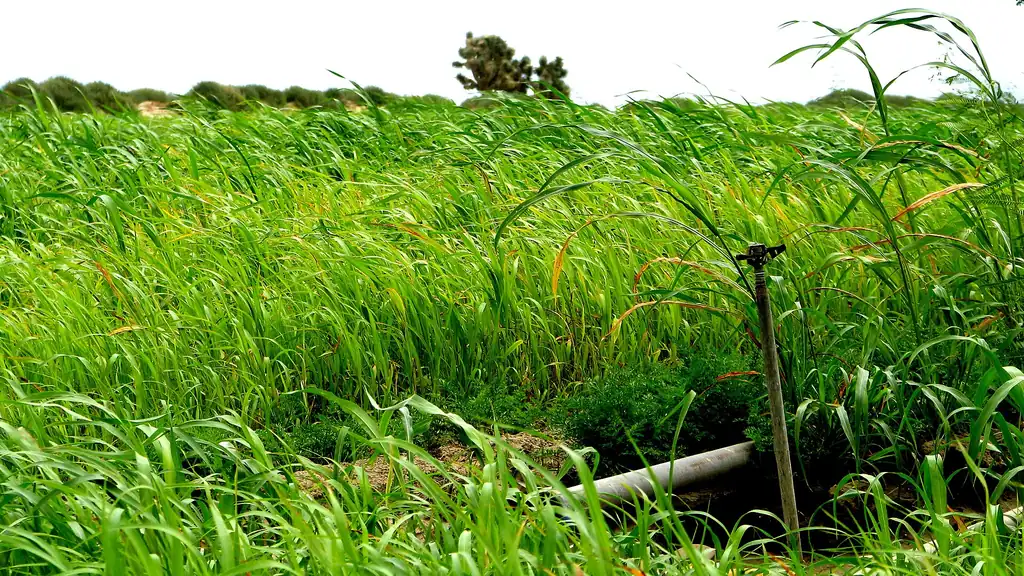
What to Check Before Comparing Impact Sprinklers
Run every candidate head through the same six checks so you compare like with like:
- Inlet size — 3/4”, 1”, 1 1/4”, 1 1/2”, and 2” are the common agricultural sizes; match the inlet to your riser and lateral, not to the crop.
- Working pressure band — most farm-size heads run 2.5-5 bar (35-75 psi); big guns need 4-7 bar. Ask for throw data at more than one pressure.
- Throw radius — small heads throw about 9-12 m, mid-size 12-24 m, big guns 30-70 m at typical pressures.
- Flow per head — roughly 0.5-2 m³/h for compact heads, 1-6 m³/h for standard field heads, and 10-60 m³/h for big guns; multiply by head count to size the pump.
- Nozzle range and interchangeability — a head that accepts several nozzle sizes adapts to pressure and spacing changes; color-coded nozzle kits make field swaps simple.
- Arc and stream adjustment — partial-circle settings and a diffuser pin for coarse or fine droplets decide whether the head suits edges, headlands, and wind conditions.
Materials matter too. Brass bodies cost more and survive hot, dusty, continuous duty; plastic (POM or nylon-type) bodies cost less and resist corrosion. Neither is universally better — the duty decides.
The Top 10 Impact Sprinklers for Farms and Orchards
1. Compact 3/4-Inch Impact Head — Small Plots and Nurseries
The entry class of agricultural impact sprinklers: a 3/4” inlet, working pressure of about 2.5-4 bar (35-60 psi), a throw of roughly 9-12 m, and flows of about 0.5-2 m³/h with 3-5 mm nozzles. Light enough to move by hand, it suits seedbeds, nursery rows, vegetable beds, and first-season establishment.
- Best for: Small blocks, nurseries, and seedling establishment where flow and pump size are limited.
- Pros: Low flow demand, easy to relocate, inexpensive to replace, simple to service.
- Cons: Short throw means more heads per hectare, and spacing errors show up quickly as dry strips.
2. Standard 1-Inch Brass-Body Impact Head — The Field Workhorse
The most common class in agriculture: 1” inlet, 2.5-4.5 bar (35-65 psi), 12-18 m throw, 1-4 m³/h flow with 4-7 mm nozzles. The brass body shrugs off heat, dust, and the occasional knock from machinery, which is why this class carries the bulk of field duty on grain, fodder, and row crops.
- Best for: General field irrigation where the system runs long hours through the season.
- Pros: Durable body, wide availability of spare parts and service kits, proven uniformity at standard spacings of 12-15 m.
- Cons: Heavier than plastic alternatives, and brass pricing sits above the budget tier.
3. Heavy-Duty 1 1/4-Inch Impact Head — Orchards and Vineyards
Stepping up to a 1 1/4” inlet with 3-5 bar (45-75 psi) working pressure, a 15-24 m throw, and 2-6 m³/h flow with 6-9 mm nozzles. Fewer heads cover a whole orchard block, which simplifies laterals and maintenance access between tree rows.
- Best for: Mature orchards and vineyards where head count and maintenance time matter more than water price.
- Pros: Wide throw reduces the number of risers in the block; robust build handles multi-season service; large nozzles tolerate pond and well water.
- Cons: Higher flow per head demands a bigger pump and mains; heavier heads need solid riser mounting.
4. Low-Angle Under-Canopy Impact Head — Keeping the Canopy Dry
A low-trajectory version (roughly 10-15° stream angle versus the 23-27° of standard heads) mounted on short risers of 0.3-0.6 m. It waters the root zone under fruit trees while keeping foliage dry, which lowers disease pressure in humid districts.
- Best for: Orchards that want under-tree watering without wetting leaves, and blocks where wind regularly disturbs high streams.
- Pros: Dry canopy, less drift in wind, water placed where feeder roots live.
- Cons: Overhead frost-protection duty needs a separate, higher mount — this head will not do both jobs from one position.
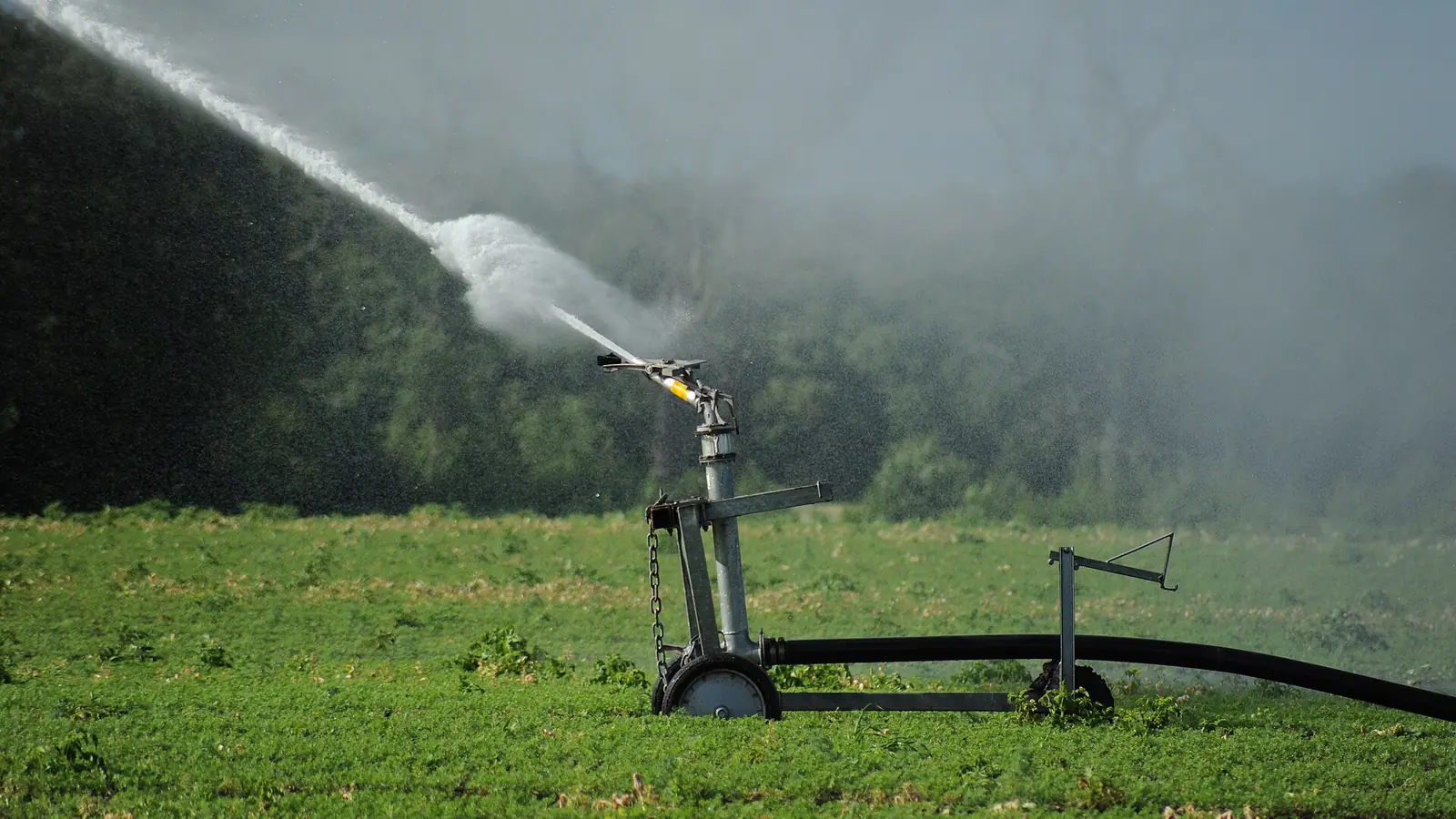
5. Big-Gun (2-Inch) Impact Sprinkler — Large Fields and Traveling Reels
The heavy end of the range: 2” inlet, 4-7 bar (60-100 psi), 30-70 m throw, and 10-60 m³/h flow with 10-20 mm nozzles. This is the class used on traveling guns, water reels, and large odd-shaped fields where fixed laterals are impractical.
- Best for: Big open acreage, pasture blocks, and reel/traveler systems.
- Pros: Enormous coverage per unit — a single gun can cover several hectares; fewer moving parts than a reel machine’s drive system.
- Cons: High flow and pressure demands; coarse droplets and heavy application rates near the gun make even coverage a layout discipline, not an accident.
6. High-Pressure Impact Head — Sloping Terrain
On hilly blocks, pressure at the highest riser can fall a bar or more below pump pressure, so heads are selected for a higher working band (typically 4-6 bar, 60-90 psi) with nozzles sized to the pressure actually available at elevation.
- Best for: Sloping fields, terraced orchards, and sites where mains run long distances from the pump.
- Pros: Maintains a usable stream where standard-pressure heads atomize into drift; coarse droplet settings hold up better in wind.
- Cons: Energy cost of pumping at higher pressure; nozzle choice becomes critical — an oversized nozzle at high pressure wastes water.
7. Diffuser-Pin Impact Head — Nurseries, Greenhouses, and Heat Cooling
Most impact heads include a diffuser pin; this class is built around using it. Pulled in, the pin breaks the stream into fine droplets for gentle watering and canopy cooling during heat events; retracted, the stream stays coarse and travels farther.
- Best for: Nursery stock, greenhouse benches, young transplants, and midday cooling bursts.
- Pros: One head covers gentle and coarse modes; fine spray cools foliage and air without soaking beds.
- Cons: Fine droplets drift in wind and evaporate faster; not the first choice for whole-field irrigation.
8. Economical Plastic-Body Impact Head — Budget Starter Systems
A 3/4” to 1” plastic-body head (POM or nylon-type) at 2.5-4 bar (35-60 psi) with 4-6 mm nozzles and a 10-15 m throw. It costs a fraction of the brass class, resists corrosion, and is light on risers and fittings.
- Best for: Start-up systems, seasonal blocks, leased ground, and farms phasing in irrigation on a budget.
- Pros: Low upfront cost, corrosion resistance, easy to store and carry.
- Cons: Shorter service life under heavy or dusty duty; less forgiving of knocks and frost; replacement frequency can erase the price advantage.
9. Multi-Nozzle Impact Head with Interchangeable Color-Coded Nozzles
A standard-body head (usually 1”) sold with a kit of color-coded nozzles from about 4 mm to 9 mm, letting one head run different spacings and pressures as the block changes. The color codes follow the industry’s shared language, so spares are easy to order.
- Best for: Mixed farms running several crops, and growers who re-layout blocks between seasons.
- Pros: One head type across the farm simplifies inventory; nozzle swaps are a field job, not a plumbing job.
- Cons: You pay for the nozzle kit; loose nozzles get lost or mixed up without a tidy storage routine.
10. Commercial-Grade Brass Impact Head with Ceramic Nozzle — Continuous Duty
The long-service class: heavy brass body, ceramic nozzle that resists wear from sandy water, and an inlet from 1” up to 2”. Built for duty cycles measured in thousands of hours — feedlots, dust control, pivot end guns, and permanent orchard systems.
- Best for: Dusty, abrasive, or continuous-duty installations where downtime is the expensive failure.
- Pros: Ceramic nozzles keep their bore and pattern far longer than brass or plastic in sandy water; heavy construction survives years of service.
- Cons: The premium price; over-specified for light seasonal duty where a plastic head earns its keep.
How to Match a Pick to Your Farm
| Plot type | Inlet | Pressure band | Typical throw | Best-matched pick |
|---|---|---|---|---|
| Small vegetables, nurseries, seedbeds | 3/4” | 2.5-4 bar (35-60 psi) | 9-12 m | 1 or 7 |
| Field crops — grain, fodder, row crops | 1” | 3-4.5 bar (45-65 psi) | 12-18 m | 2 or 9 |
| Orchards and vineyards | 1-1 1/4” | 3-5 bar (45-75 psi) | 15-24 m | 3 or 4 |
| Large open fields, pasture, reels | 2” | 4-7 bar (60-100 psi) | 30-70 m | 5 |
| Sloping or long-mains blocks | 1-1 1/4” | 4-6 bar (60-90 psi) | 12-20 m | 6 |
| Nursery, greenhouse, heat cooling | 3/4” | 2-4 bar (30-60 psi) | 9-15 m | 7 |
| Budget or seasonal systems | 3/4-1” | 2.5-4 bar (35-60 psi) | 10-15 m | 8 |
| Continuous or dusty duty | 1-2” | 3-6 bar (45-90 psi) | 12-24 m | 10 |
Three habits keep any of these picks working: space heads so adjacent sprays overlap (spacing close to the throw radius in calm conditions, tighter where wind is common), measure pressure at the riser rather than trusting the pump gauge, and order service kits — drive-arm springs, seals, and washers age first — with the heads rather than after the season starts.
Frequently Asked Questions
Q: What size impact sprinkler does a farm need? A: Match the inlet and nozzle to spacing and available pressure rather than the size of the farm. Small plots run 3/4-inch heads at 2.5-4 bar; field and orchard blocks typically run 1 to 1 1/4-inch heads at 3-5 bar; large open fields move up to 2-inch guns at 4-7 bar.
Q: How far does an impact sprinkler throw water? A: Compact heads throw about 9-12 m, standard mid-size heads 12-24 m, and big guns 30-70 m at typical working pressures. Actual throw depends on nozzle size, pressure at the riser, and wind, so check the supplier’s throw chart at multiple pressures.
Q: Brass or plastic impact sprinkler body — which lasts longer? A: Brass bodies hold up better in dusty, hot, or continuous-duty conditions and take knocks without cracking; plastic bodies cost less, resist corrosion, and suit clean-water systems with lighter duty. Many farms run plastic on routine blocks and brass where downtime hurts most.
Q: What pressure do impact sprinklers need to work properly? A: Most farm-size impact heads work well in the 2.5-5 bar (35-75 psi) band, with big guns needing 4-7 bar. Measure pressure at the riser, not the pump, because friction losses in mains and laterals can easily drop it by a bar or more.
Q: Are impact sprinklers efficient enough for agriculture? A: Impact systems typically apply water at 70-80% efficiency — lower than drip, but they cover far more ground per head, tolerate pond and well water with suspended solids, and handle frost protection and canopy cooling that drip cannot. For most field and orchard duty that efficiency is acceptable when heads are spaced with overlap and run in low wind.
Q: Can I buy impact sprinklers factory-direct with OEM branding? A: Yes. Factory-direct manufacturers such as IRRIGRAIN supply impact sprinklers with private-label branding, custom packaging, and matched color-coded nozzle kits for distributors and irrigation companies, with samples before the first production order.
The Bottom Line
The head is only half the system — spacing, pressure at the riser, and nozzle match decide whether the field dries evenly or in patches. Start with the six checks above, pick the class that fits your block and water supply, and hold every supplier to throw data at multiple pressures.
IRRIGRAIN supplies impact sprinklers across these classes factory-direct, with OEM branding, custom packaging, and matched nozzle kits for distributors and irrigation companies — value pricing plus customization in one source. Send your block size, water source flow, and pump pressure to cj226144@gmail.com for a configuration matched to your numbers.
- Impact Sprinkler — the agricultural range
- OEM/ODM Customization — private-label tooling and packaging
- Impact Sprinkler Guide — sizing, spacing and applications
Frequently Asked Questions
What size impact sprinkler does a farm need?
Match the inlet and nozzle to spacing and available pressure rather than the size of the farm. Small plots run 3/4-inch heads at 2.5-4 bar; field and orchard blocks typically run 1 to 1 1/4-inch heads at 3-5 bar; large open fields move up to 2-inch guns at 4-7 bar.
How far does an impact sprinkler throw water?
Compact heads throw about 9-12 m, standard mid-size heads 12-24 m, and big guns 30-70 m at typical working pressures. Actual throw depends on nozzle size, pressure at the riser, and wind, so check the supplier's throw chart at multiple pressures.
Brass or plastic impact sprinkler body — which lasts longer?
Brass bodies hold up better in dusty, hot, or continuous-duty conditions and take knocks without cracking; plastic bodies cost less, resist corrosion, and suit clean-water systems with lighter duty. Many farms run plastic on routine blocks and brass where downtime hurts most.
What pressure do impact sprinklers need to work properly?
Most farm-size impact heads work well in the 2.5-5 bar (35-75 psi) band, with big guns needing 4-7 bar. Measure pressure at the riser, not the pump, because friction losses in mains and laterals can easily drop it by a bar or more.
Are impact sprinklers efficient enough for agriculture?
Impact systems typically apply water at 70-80% efficiency — lower than drip, but they cover far more ground per head, tolerate pond and well water with suspended solids, and handle frost protection and canopy cooling that drip cannot. For most field and orchard duty that efficiency is acceptable when heads are spaced with overlap and run in low wind.
Can I buy impact sprinklers factory-direct with OEM branding?
Yes. Factory-direct manufacturers such as IRRIGRAIN supply impact sprinklers with private-label branding, custom packaging, and matched color-coded nozzle kits for distributors and irrigation companies, with samples before the first production order.