Smart Home Irrigation: Pairing Impact Sprinklers with Timers and Sensors
2026-08-25
Smart Home Irrigation: Pairing Impact Sprinklers with Timers and Sensors
The typical homeowner’s watering routine goes something like this: drag the sprinkler out on a hot evening, guess how long it has been since the last rain, leave it running, and forget it until the grass looks dry again. The result is predictable—overwatered patches next to dry ones, runoff down the driveway, and a water bill that climbs every July. U.S. EPA estimates suggest that as much as 50% of outdoor water use is lost to overwatering, evaporation, wind, and runoff, and homes that water on a fixed schedule often put down 30–50% more than the lawn actually needs. The fix is not a more expensive sprinkler; it is pairing a sprinkler that throws a reliable pattern with a timer that decides when to run and sensors that decide whether to run at all. This guide explains how impact sprinklers fit into smart home irrigation, which timers and sensors to combine with them, and how to size the whole setup without over-engineering a single-zone yard.
Why Timers and Sensors Matter for Home Irrigation
Watering is a timing problem more than a volume problem. A lawn in a temperate climate typically needs roughly 1–1.5 inches of water per week during peak summer growth, which works out to about 0.2–0.3 inches per day including application losses. An impact sprinkler running at a typical precipitation rate of 0.2–0.6 inches per hour covers that in a few short cycles—yet most manual watering runs far longer than that, because nobody is standing there with a rain gauge.
A timer solves the when: it starts the sprinkler early in the morning (commonly 4–7 a.m., when wind speeds are low and evaporation losses are smallest), runs the zone for a set duration, and stops automatically. A rain sensor solves the whether: after a storm deposits its adjustable cutoff—typically 1/8–1/2 inch—the controller skips the next cycle or two instead of watering saturated ground. A soil moisture sensor adds a second check by letting the soil itself veto a scheduled cycle when it is still damp at root depth. Together they convert a fixed schedule into something close to actual plant demand, which is where the savings come from: utility pilots and university trials commonly report 15–30% reductions in outdoor water use when weather or soil-based controls replace a plain timer, and EPA WaterSense-labeled smart controllers average roughly 8,800 gallons saved per household per year.
There is a catch worth naming: automation only helps if the sprinkler underneath it does its job. A fine-spray head that drifts in wind, throws uneven coverage, or gets blocked by debris wastes exactly as much water on a smart schedule as on a dumb one. Impact sprinklers are a good match for home automation precisely because their large droplets resist wind drift, their patterns stay uniform across the wetted radius, and their wide water passages tolerate the occasional bit of grit from a hose or well—so the water the controller releases actually lands where it is aimed.
How Impact Sprinklers Connect to Timers and Controllers
There are two common ways to put an impact sprinkler on a schedule, and the choice mostly depends on whether the system is portable or permanently installed.
Hose-end timers for portable sprinklers. If you run a sprinkler on a hose from a yard hydrant or hose bib, a battery-powered hose-end timer is the simplest route. These units thread onto a standard 3/4” garden hose connection, support several start times per day with run durations from a couple of minutes up to several hours, and run a full season on a set of AA or 9V batteries—typically 4–6 months of regular use. You set the impact sprinkler’s coverage angle, dial in the run time, and the timer handles the rest. The limitations are worth knowing: no remote control, no weather awareness, and generally a single schedule for everything on that hose. That is fine for one lawn area or a garden bed, and it is the lowest-cost way to automate an impact sprinkler.
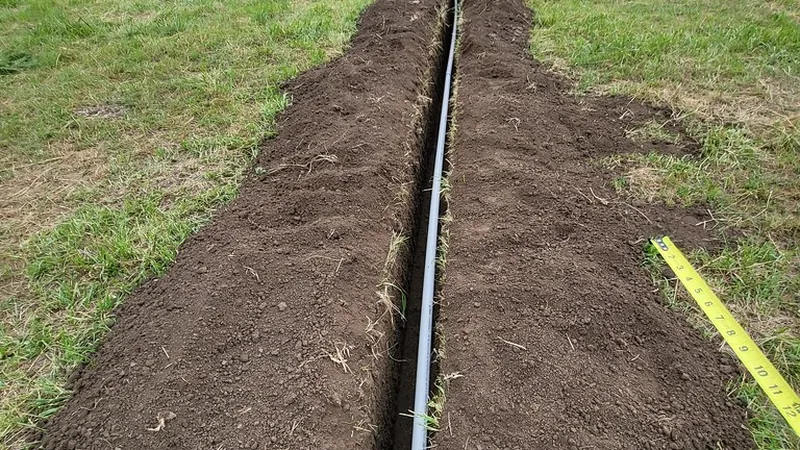
Smart controllers and solenoid valves for in-ground zones. For a permanent setup, a standard irrigation controller—including Wi-Fi-enabled “smart” models with 4–16 zones—operates 24 VAC solenoid valves that open and close water to each zone. The impact sprinklers sit on risers or pop-up bodies in that zone, fed by PVC or poly pipe sized for the total flow. The controller’s zone schedule becomes your watering program; the smart features (weather-based scheduling, remote control from a phone app, cycle-and-soak splitting) ride on top of it. Typical solenoid valves draw around 0.3–0.6 A inrush at 24 VAC, which any standard controller output handles comfortably, and a single 1” valve can pass the 5–12 GPM that a typical home impact sprinkler zone uses.
A few practical notes from the field. First, schedule impact sprinklers in the early morning—wind is lowest and evaporation losses shrink, which matters because large-droplet streams still lose some water to drift in gusty conditions. Second, on slopes or heavy clay soil, use cycle-and-soak: split a zone’s run time into two or three shorter cycles separated by 30–60 minutes so water infiltrates instead of running off. Third, keep the controller’s rain delay feature or a manual override within reach—sensor or no sensor, a glance at the sky before a storm beats any automation.
Sensors That Make an Impact Sprinkler System Smarter
The most useful sensors for a home impact sprinkler setup, in rough order of value per dollar:
Rain sensors. A rain sensor—wired to the controller or wireless (typical ranges around 200–300 feet)—measures accumulated rainfall and suspends scheduled cycles after its cutoff is reached, commonly adjustable from about 1/8 to 1/2 inch of rain. It also handles the edge case timers miss: rain that falls after the controller has already started watering. For a hose-end timer setup, a standalone rain gauge plus a manual skip is the low-tech equivalent, but the automatic version is a small investment that protects the whole season.
Soil moisture sensors. A probe buried at root depth—4–12 inches is typical for lawns and annual gardens—reports moisture continuously, and the controller uses it to skip or shorten cycles when the soil is already damp. Readings are commonly expressed as soil tension in centibars (a practical target band for garden soils runs roughly 10–40 centibars, drier numbers meaning drier soil) or as percent volumetric water content. This is the most direct way to stop watering a lawn that does not need it, and it is especially useful on beds with different exposure than the rest of the yard.
Flow sensors. A flow meter installed on the main line measures live flow in GPM and gives the controller two alarms worth having: a high-flow condition (broken pipe, burst hose, a sprinkler head knocked off its riser) and a low-flow condition (a blocked nozzle or a valve that fails to open). High-end controllers can shut the zone down automatically within minutes—a meaningful protection against a week of unnoticed flooding. Home-scale meters commonly read from about 0.5 up to 50+ GPM, comfortably covering a one- or two-zone impact sprinkler layout.
Freeze sensors and seasonal checks. In climates with hard winters, a freeze sensor or simply a disciplined drain-down routine matters more than any other component: impact sprinklers left with water in the body and pipe can crack when temperatures hold below 32°F. Most controllers offer seasonal adjustment—scaling run times up or down by a percentage as the season changes—which is a low-effort way to keep the schedule sensible between spring and fall.
Choosing the Right Smart Setup: Selection Guide and Comparison
Sizing a smart irrigation setup for a home is a matching exercise: pressure and flow first, then timer, then sensors. The selection table below summarizes typical industry ranges to plan around—confirm the exact numbers against your local water pressure and your supplier’s published specs.
| Component | Typical spec range | What it does | Notes |
|---|---|---|---|
| Impact sprinkler | 30–80 psi operating; 30–100 ft throw; ~3–12 GPM home sizes | Throws the water pattern | Part-circle models (e.g., 90–270°) suit edges and beds |
| Hose-end timer | Battery-powered, 3/4” hose thread, 2–4+ start times/day | Schedules a portable sprinkler | Simplest option for a single hose bib |
| Smart controller | 24 VAC zone outputs, 4–16 zones, Wi-Fi/ET-based scheduling | Runs valves on a weather-aware schedule | Look for rain-delay and cycle-and-soak features |
| Solenoid valve | 24 VAC, ~0.3–0.6 A inrush; 3/4”–1” sizes | Opens/closes water per zone | One valve per zone; 1” handles ~5–12 GPM |
| Rain sensor | Cutoff adjustable ~1/8–1/2”; wired or wireless | Skips cycles after rain | Wireless range typically 200–300 ft |
| Soil moisture sensor | Probe depth 4–12”; threshold ~10–40 centibars or % VWC | Vetoes cycles when soil is damp | Place at root depth in a representative spot |
| Flow sensor | ~0.5–50+ GPM, pulse output | Flags high-flow (breaks) and low-flow (blockage) | Mount on the main line before zone valves |
| Spacing | 50–65% of wetted diameter (40–50% in wind) | Keeps coverage even between heads | Overlap is what creates uniform patterns |
The comparison table below stacks up the three realistic ways a homeowner can run an impact sprinkler, from simplest to most automated:
| Factor | Hose-end timer + impact sprinkler | Smart controller + valves + impact sprinkler | Manual (no timer) |
|---|---|---|---|
| Upfront cost | Low (timer is roughly the price of a good sprinkler) | Moderate (controller, valves, pipe, wiring) | Lowest |
| Automation | Scheduled starts, no remote or weather input | Weather/soil-based scheduling, phone control | None |
| Water efficiency | Good if rain-delayed manually | Highest—skips cycles the others cannot see | Depends entirely on memory |
| Installation | Minutes, no tools beyond a wrench | Requires trenching, wiring, and valve boxes | None |
| Good fit for | Single lawn area, gardens, rentals | Whole-yard permanent systems, multiple zones | Occasional spot watering |
| Failure modes | Battery dies mid-season; rain not accounted for | Power loss resets programs on some models | Forgetfulness and runoff |
For most homeowners, the sensible path is the middle one: start with a hose-end timer and a good impact sprinkler, add a rain gauge or sensor once the schedule is established, and upgrade to an in-ground smart controller only when the yard has multiple zones that genuinely need separate programs. The automation should serve the sprinkler, not the other way around.
FAQ
Q: Can I run an impact sprinkler from a simple hose-end timer? A: Yes. Battery-powered hose-end timers with standard 3/4” garden hose threads are a common starting point for an impact sprinkler on a single hose bib. They support a few start times per day, run lengths from minutes up to several hours, and cost far less than an in-ground system. They lack remote control and weather awareness, so pair them with a rain check—manual or sensor—before heavy storms.
Q: What water pressure do impact sprinklers need for home use? A: Most standard impact sprinklers operate comfortably in the 30–80 psi range, which suits typical municipal supply pressure of 40–60 psi at the house. Low-pressure models are designed for roughly 25–40 psi for homes on modest pumps or gravity-fed tanks. Check pressure at the sprinkler itself—after hose or pipe friction loss—before choosing a nozzle size.
Q: Do rain sensors really save water? A: In most climates, yes. A rain sensor with a typical adjustable cutoff of 1/8–1/2 inch of rainfall automatically skips scheduled cycles after a storm, so the lawn is not watered twice. EPA estimates that as much as 50% of outdoor water use is lost to overwatering, wind, runoff, and evaporation, and skipping unnecessary cycles is one of the cheapest ways to cut that waste.
Q: How does a soil moisture sensor decide when to water? A: A capacitance or resistance probe buried at root depth—commonly 4–12 inches—reads moisture and compares it with a threshold you set, often expressed in centibars of soil tension or percent volumetric water content. A common working range for garden soils is roughly 10–40 centibars, wetter to drier. When the reading stays above the threshold, the controller skips or shortens the scheduled cycle.
Q: What does a flow sensor protect against? A: A flow meter on the main line measures live flow in GPM and flags two problems: a high-flow alarm catches a broken pipe, burst hose, or sprinkler knocked off its riser within minutes, and a low-flow alarm catches a blocked nozzle or stuck valve. Some controllers then shut the zone down automatically. Typical home flow meters measure from about 0.5 up to 50+ GPM.
Q: Can I buy impact sprinklers configured for my home setup? A: Yes, especially when you buy factory-direct. Manufacturers that sell directly to end users routinely offer OEM options on nozzle size, inlet thread, body material, and full- or part-circle operation, so the sprinkler matches your pressure, pump, and pipe instead of the other way around. That flexibility is standard practice for factory suppliers.
Start Your Smart Irrigation Setup
Smart home irrigation is less about gadgets and more about closing the loop between schedule and reality: a timer for the when, sensors for the whether, and a sprinkler that puts the water down evenly every time. Impact sprinklers hold up their end of that loop—uniform large-droplet coverage, tolerance for imperfect water, and simple construction that keeps working season after season.
As a factory-direct manufacturer, IRRIGRAIN supplies impact sprinklers and irrigation accessories to homeowners and dealers worldwide, with OEM options on nozzle size, inlet threads, body material, and part-circle operation so the equipment fits your pressure and layout. Buying direct also means factory pricing without brand markups. Email us your yard size, water pressure, and planned zones, and we will help you match sprinklers, valves, and sensors into a setup that waters on demand—not on guesswork.
Frequently Asked Questions
Can I run an impact sprinkler from a simple hose-end timer?
Yes. Battery-powered hose-end timers with standard 3/4" garden hose threads are a common starting point for impact sprinklers on a single hose bib. They support a few start times per day, run lengths from minutes up to several hours, and cost far less than an in-ground system. They lack remote control and weather awareness, so pair them with a rain sensor or a quick manual check before heavy storms.
What water pressure do impact sprinklers need for home use?
Most standard impact sprinklers operate comfortably in the 30–80 psi range, which suits typical municipal supply pressure of 40–60 psi at the house. Low-pressure models are designed for roughly 25–40 psi for homes on modest pumps or gravity-fed tanks. Check the pressure at the sprinkler itself—after hose or pipe friction loss—before choosing a nozzle size.
Do rain sensors really save water?
In most climates, yes. A rain sensor with a typical adjustable cutoff of 1/8–1/2 inch of rainfall automatically skips scheduled cycles after a storm, so the lawn is not watered twice. EPA estimates that as much as 50% of outdoor water use is lost to overwatering, wind, runoff, and evaporation, and skipping unnecessary cycles is one of the cheapest ways to cut that waste.
How does a soil moisture sensor decide when to water?
A capacitance or resistance probe buried at root depth—commonly 4–12 inches for lawns and annual beds—reads the moisture level and compares it with a threshold you set, often expressed in centibars of soil tension or percent volumetric water content. A common working range for garden soils is roughly 10–40 centibars, wetter to drier. When the reading stays above the threshold, the controller skips or shortens the scheduled cycle.
What does a flow sensor protect against?
A flow meter on the main line measures live flow in GPM and flags two problems: a high-flow alarm catches a broken pipe, burst hose, or sprinkler knocked off its riser within minutes instead of after a soggy week; a low-flow alarm catches a blocked nozzle or stuck valve. Some controllers then shut the zone down automatically. Typical home flow meters measure from about 0.5 up to 50+ GPM.
Can I buy impact sprinklers configured for my home setup?
Yes, especially when you buy factory-direct. Manufacturers that sell directly to end users routinely offer OEM options on nozzle size, inlet thread, body material, and full- or part-circle operation, so the sprinkler matches your pressure, pump, and pipe instead of the other way around. That flexibility is standard practice for factory suppliers, not a special request.