Pasture Irrigation with Impact Sprinklers: Keeping Livestock Grazing Land Green
2026-08-23
|—| | Nozzle size | Roughly 1/8” to 1/2”+ depending on model | Drives flow rate “ seoTitle: “Pasture Irrigation with Impact Sprinklers: Keeping Livestock Grazing Land Green” seoDesc: “seoTitle - “pasture-irrigation-with-impact-sprinklers” seoDesc - “|—|—| | Nozzle size | Roughly 1/8” to 1/2”+ depending on model | Drives flow rate “
|—| | Nozzle size | Roughly 1/8” to 1/2”+ depending on model | Drives flow rate and droplet size | Smaller nozzles suit small pumps; larger nozz” seoTitle: “pasture-irrigation-with-impact-sprinklers” seoDesc: “|—|—| | Nozzle size | Roughly 1/8” to 1/2”+ depending on model | Drives flow rate and droplet size | Smaller nozzles suit small pumps; larger nozz”
Pasture Irrigation with Impact Sprinklers: Keeping Livestock Grazing Land Green
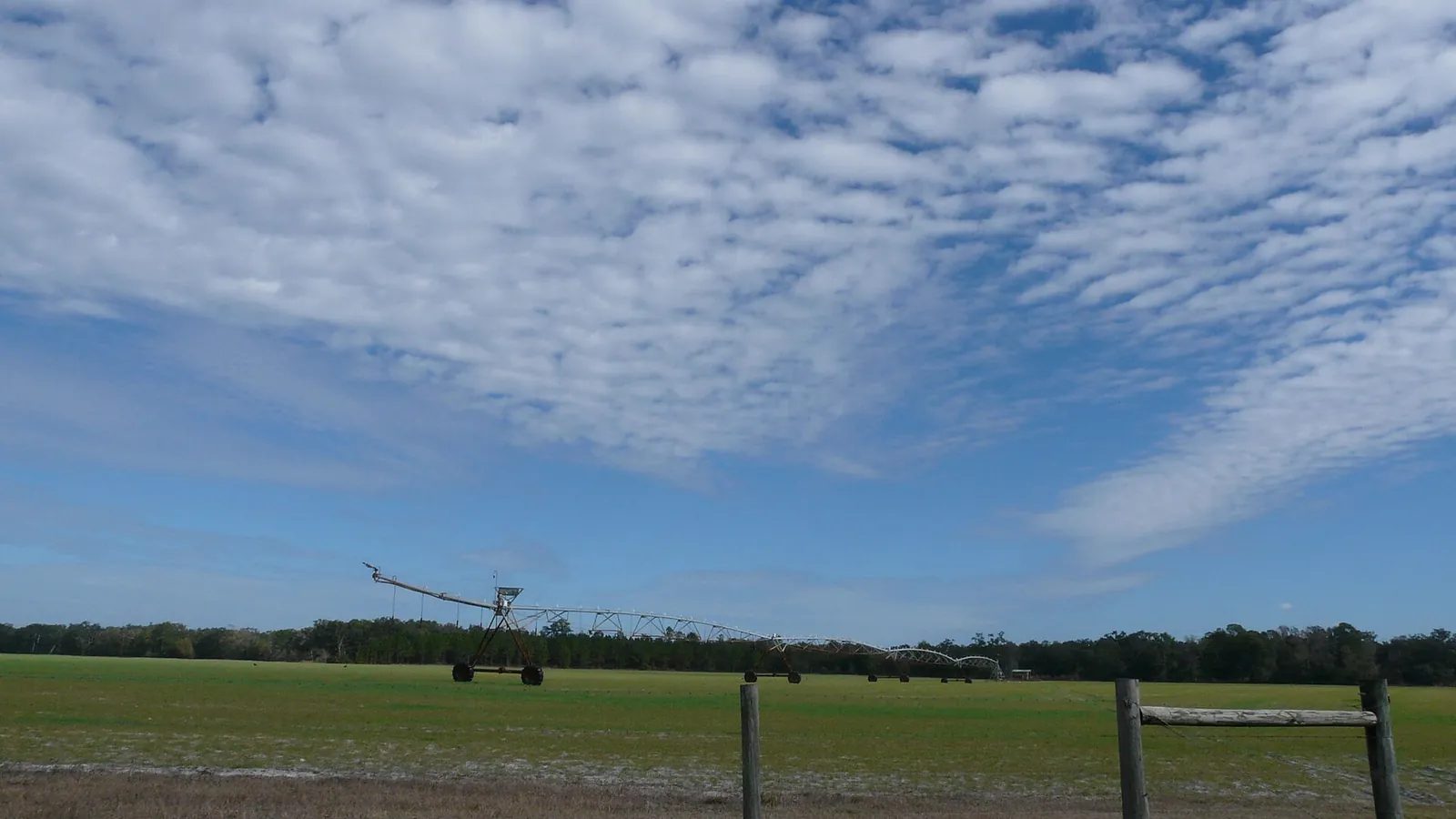
Dry spells hit grazing land harder than almost anything else. When summer pasture growth stalls, stocking rates have to drop, hay bills climb, and paddocks get grazed down to bare dirt before you know it. For many livestock operations—cow-calf herds, dairy heifers, sheep, horses—irrigation is less about chasing picture-perfect grass and more about predictable forage through the hottest weeks of the year. Impact sprinklers have been watering pasture for decades, and there is a good reason: they are simple, tough, and flexible enough to follow rotational grazing across odd-shaped paddocks. This guide walks through why irrigated pasture pays, how impact sprinklers do the job, how to pick the right ones for your land, and how they stack up against high-cost systems like center pivots on smaller operations.
Why Irrigation Makes Sense on Grazing Land
Forage yield is the first number to look at. In semi-arid regions, extension programs routinely report that irrigated pasture produces several times the dry matter of the same land left dryland, with the gap widest in midsummer when rainfall is scarce. That translates directly into more animal grazing days per acre—many operations effectively double or triple their summer carrying capacity on the same fenced area.
The water requirement itself is modest and easy to plan around. During peak growth, cool-season grasses typically use about 0.1–0.2 inches of water per day, and warm-season grasses can pull slightly more. Extension guidance for irrigated pasture commonly lands in the 1–1.5 inches per week range during peak demand, or roughly 0.2–0.3 inches per day including application losses. Total seasonal evapotranspiration for a productive pasture often runs 18–30 inches depending on climate, grass species, and how long the grazing season lasts.
Irrigation also protects the soil. When forage stays ahead of the animals, grazing pressure spreads across the paddock instead of concentrating on a few favorite spots. Root systems stay alive and dense, which holds soil in place, keeps organic matter cycling, and reduces the bare patches that turn into erosion or weed outbreaks after a drought. Some graziers also find that irrigated paddocks recover faster after hoof traffic, because the forage is actively growing instead of just surviving.
The economics matter too. Standing forage is typically cheaper than bought hay, and a dependable irrigation schedule lets you hold more animals through the dry season without feeding your way through the profit margin. On smaller farms, even a modest set-move system on the closest paddocks can smooth out the worst of the summer slump.
How Impact Sprinklers Work—and Why They Suit Pasture
An impact sprinkler is a straightforward machine. Pressurized water shoots through a nozzle, strikes a spring-loaded arm, and the arm’s recoil rotates the sprinkler in a circle—or a partial circle, if you set it that way. The result is a pulsing, large-droplet stream that breaks up into a uniform pattern across the wetted radius. The design has been around for generations because it works in conditions that frustrate finer spray nozzles.
Large droplets are the big advantage on open pasture. They hold up better in wind than a fine mist, so more water lands where you aimed it and less evaporates before reaching the grass. Impact sprinklers also tolerate silt and debris better than precision spray nozzles, because the water passages are larger and the mechanism has few delicate parts to clog. For farms drawing from ponds, streams, or shallow wells, that durability saves real maintenance time over a season.
The working range covers most pasture situations comfortably. Typical impact sprinklers run at 30–80 psi, with some low-pressure models designed to operate in the 25–40 psi band for smaller pumps. Flow rates span from a few gallons per minute on small paddock units up to 40–50 GPM or more on large full-size heads. Throw radius generally falls between about 30 and 100 feet depending on nozzle size and pressure, which determines how far apart you can space them.
Two design choices matter in the field. Standard trajectory angles sit around 20–24 degrees, which works well in most conditions; low-angle models, often around 7–12 degrees, keep the stream lower and are worth considering on windy sites. Full-circle heads cover a complete arc, while part-circle models water a wedge—useful along fence lines, buildings, and paddock corners.
In practice, impact sprinklers are the workhorse of set-move irrigation: 1- or 2-inch aluminum pipe laid across the paddock, sprinklers mounted on 2–4 foot risers, and the whole line moved every 12–24 hours to the next set. The capital cost is low compared with permanently installed systems, and because the equipment is portable, it can follow rotational grazing from paddock to paddock. That flexibility is why many small and mid-sized livestock farms still irrigate with impact sprinklers long after more elaborate options became available.
Choosing the Right Impact Sprinkler: A Selection Guide
Sizing a sprinkler is about matching it to your pump, your pipe, and your paddock layout—not buying the biggest head available. The table below summarizes the industry-typical ranges to work from. Treat them as planning benchmarks, and confirm the exact numbers against your pump curve and your supplier’s published data.
| Selection factor | Typical range (industry norms) | Why it matters | Notes |
|---|---|---|---|
| Nozzle size | Roughly 1/8” to 1/2”+ depending on model | Drives flow rate and droplet size | Smaller nozzles suit small pumps; larger nozzles need serious flow |
| Flow rate | ~3 GPM small heads up to 40–50+ GPM large heads | Needs to fit your pump capacity and pipe size | Check total flow of all heads against pump output |
| Operating pressure | 30–80 psi standard; low-pressure models 25–40 psi | Sets throw radius and uniformity | Low-pressure models suit modest pumps and long laterals |
| Throw radius | ~30–100 ft depending on size and pressure | Determines sprinkler spacing | Larger radius = fewer heads per acre |
| Spacing | Roughly 50–65% of wetted diameter | Keeps the pattern even | Space closer in wind; 40–50% of diameter is common on windy sites |
| Riser height | 2–4 ft typical | Lifts the stream above tall grass | Too-low risers block the pattern; too-high ones wobble in wind |
| Coverage angle | Full circle or part circle (e.g., 90–270°) | Avoids watering fences and lanes | Part-circle heads save water along paddock edges |
| Trajectory | Standard ~20–24°; low-angle ~7–12° | Wind resistance and clearance | Low-angle models help on exposed, breezy ground |
| Body material | Brass, plastic, or metal/plastic hybrids | Lifespan versus cost | Brass holds up to abuse; plastic is lighter and cheaper |
| Inlet thread | 3/4” or 1” common on pasture sizes | Needs to match riser and pipe fittings | Standard threads simplify replacement parts |
A practical sizing check takes two minutes. Add up the flow of every sprinkler that will run at once, and compare it with what your pump delivers at the pressure you plan to run. Then estimate the precipitation rate: for typical pasture spacings, a rate in the 0.2–0.6 inches per hour range is a sensible target, because it puts down the weekly inch-and-a-half over a normal set length without runoff. If the rate comes out far above that, spacing or nozzle size needs adjusting.
It is also worth confirming that the heads you buy match the thread and connection standard used on your pipe system. On this point, buying factory-direct has a practical advantage: manufacturers that sell direct to farmers can often supply OEM options on nozzle size, inlet thread, and body material, so the sprinkler matches your existing pipe rather than the other way around. That kind of tailoring is a normal part of working with a factory supplier, not a special favor.
Impact Sprinklers vs. Center Pivots on Small Pastures
Center pivots are impressive machines, but they belong to a different scale of operation. On a small or irregularly shaped pasture, the economics rarely work in their favor. The comparison table below lays out the main trade-offs for a livestock operation considering both options.
| Factor | Impact sprinkler set-move | Center pivot |
|---|---|---|
| Upfront cost | Low—heads, risers, and portable pipe | High—a small pivot commonly runs in the tens of thousands, plus power supply and well/pump upgrades |
| Field shape | Handles irregular paddocks, slopes, and odd corners | Needs a fairly regular, unobstructed field; corners and boundaries outside the circle stay dry |
| Labor | Move pipe every 12–24 hours during peak season | Low day-to-day labor; system runs unattended |
| Maintenance | Simple parts, repairable in the field | Specialized drive, electrical, and gear components often need dealer service |
| Power and water | Works with a standard pump; pressure 30–80 psi at the head | Needs high flow and often lower pressure; electric drive adds a power bill |
| Grazing system fit | Portable—follows rotational paddocks | Fixed coverage; fencing and lanes need to work around the pivot circle |
| Flexibility | Easy to expand, rearrange, or skip paddocks | Difficult and expensive to move or resize |
| Typical fit | Small and mid-size pastures, multi-paddock systems, irregular ground | Larger, regular fields (often 40+ acres) with high-value forage |
The pattern is fairly clear. A center pivot starts to earn its keep on larger, regular fields where the low labor requirement and high uniformity pay for the investment over many seasons. On a 10- or 20-acre paddock system broken up by fences, creeks, and tree lines, a set of impact sprinklers typically delivers most of the benefit at a fraction of the capital outlay—and it can be picked up and moved to a different farm if the lease changes.
There is also a middle path. Some operations run a pivot on the big, flat field nearest the barn and use impact sprinklers on the outlying or irregular paddocks. Others start with set-move impact systems, learn their water and forage numbers, and only consider a pivot once they have several years of data showing the land and the budget can carry it. Starting small and proving the economics is a low-risk way to scale up later.
FAQ
How often do I need to move sprinklers on pasture? In peak season, a typical set length runs 12–24 hours—enough to apply roughly 0.5–1 inch per set, depending on your precipitation rate. Move the line, and start the next set. During cooler or wetter periods you can stretch set times or skip paddocks entirely.
Can impact sprinklers handle pond or stream water with silt? Generally yes. The large water passages and simple mechanism handle dirty water far better than fine spray nozzles, which is one reason they are popular on pasture. A strainer or basic filter at the pump is still worth installing, and nozzle inserts should be checked periodically for wear and blockage.
Does wind ruin the pattern? Wind degrades any sprinkler’s uniformity, but impact sprinklers cope better than fine-mist systems because the large droplets drift less. Running sets in the early morning or evening when wind drops, using low-angle heads on exposed ground, and spacing heads at 40–50% of wetted diameter on breezy sites all help keep coverage even.
What pressure do I need at the sprinkler? Most standard impact sprinklers operate comfortably in the 30–80 psi range; low-pressure models are designed for roughly 25–40 psi. Check what your pump actually delivers at the sprinkler—accounting for elevation and friction loss in the pipe—before choosing nozzle sizes.
Do I need a filter? It is recommended. Even clean-looking well water carries sand and debris that wears nozzles and can jam the impact arm. A simple screen or disc filter at the pump protects the whole system and costs little compared with replacing worn parts.
Can I order sprinklers with custom nozzle or thread sizes? With a factory-direct supplier, yes. OEM configuration—nozzle size, inlet thread, body material, part-circle options—is standard practice for manufacturers that sell direct to farms, so the sprinklers can be matched to your existing pump and pipe rather than forcing you to adapt to off-the-shelf inventory.
Get the Right Impact Sprinklers for Your Pasture
Irrigated pasture is a proven way to stretch summer forage, and impact sprinklers remain one of the most cost-effective tools for the job—especially on smaller, multi-paddock operations where big machinery simply doesn’t fit. The key is matching the sprinkler to your pump and layout, spacing it for even coverage, and choosing heads that will still be working after a few hard seasons.
As a factory-direct manufacturer, we supply impact sprinklers and parts to livestock operations worldwide, with OEM options on nozzle size, threads, and materials so the equipment fits your existing system. Buying direct also means value pricing without brand markups. Contact us with your paddock size, pump flow, and water source, and we’ll help you put together a set that keeps your grazing land green through the dry season.
Frequently Asked Questions
How often do I need to move sprinklers on pasture?
In peak season, a typical set length runs 12–24 hours—enough to apply roughly 0.5–1 inch per set, depending on your precipitation rate. Move the line, and start the next set. During cooler or wetter periods you can stretch set times or skip paddocks entirely.
Can impact sprinklers handle pond or stream water with silt?
Generally yes. The large water passages and simple mechanism handle dirty water far better than fine spray nozzles, which is one reason they are popular on pasture. A strainer or basic filter at the pump is still worth installing, and nozzle inserts should be checked periodically for wear and blockage.
Does wind ruin the pattern?
Wind degrades any sprinkler's uniformity, but impact sprinklers cope better than fine-mist systems because the large droplets drift less. Running sets in the early morning or evening when wind drops, using low-angle heads on exposed ground, and spacing heads at 40–50% of wetted diameter on breezy sites all help keep coverage even.
What pressure do I need at the sprinkler?
Most standard impact sprinklers operate comfortably in the 30–80 psi range; low-pressure models are designed for roughly 25–40 psi. Check what your pump actually delivers at the sprinkler—accounting for elevation and friction loss in the pipe—before choosing nozzle sizes.
Do I need a filter?
It is recommended. Even clean-looking well water carries sand and debris that wears nozzles and can jam the impact arm. A simple screen or disc filter at the pump protects the whole system and costs little compared with replacing worn parts.
Can I order sprinklers with custom nozzle or thread sizes?
With a factory-direct supplier, yes. OEM configuration—nozzle size, inlet thread, body material, part-circle options—is standard practice for manufacturers that sell direct to farms, so the sprinklers can be matched to your existing pump and pipe rather than forcing you to adapt to off-the-shelf inventory.